
How democratic institutions actually work—and for whom. We investigate Supreme Court doctrine, voting rights litigation, municipal rebellion, participatory budgeting, judicial activism, executive immunity, and the administrative state. From Chevron deference to bilingual governance, legal architecture shapes daily life.
59 articles
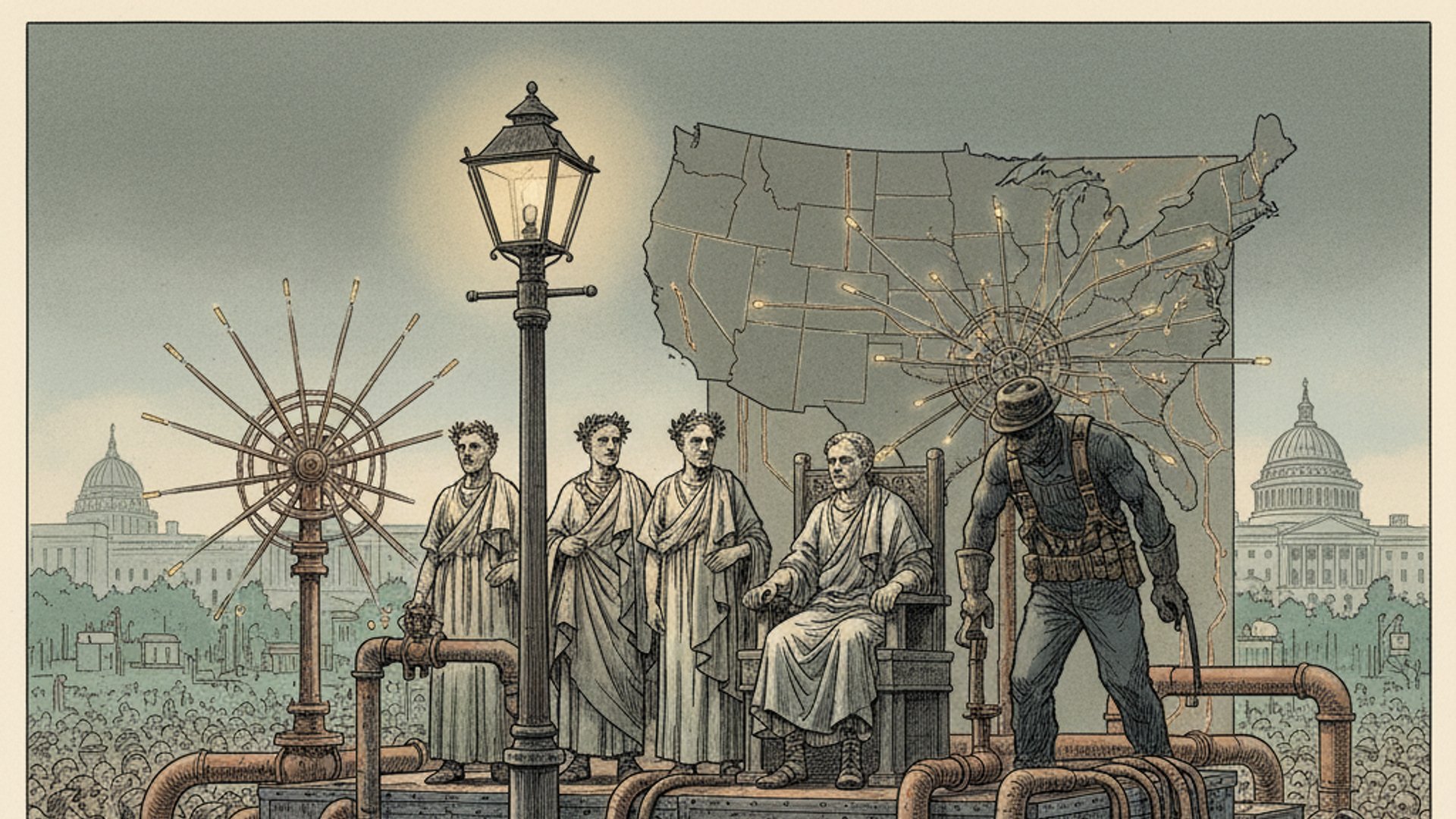
Putin''s Pyrrhic Victory: How Russia Broke the West While Losing Ukraine
While Russia hemorrhages resources in Ukraine, Putin achieves his deeper strategic goal: proving that Western liberal democracy lacks the resolve for sustained confrontation with authoritarian power.
The Textbook Wars
Texas HB 900 was struck down, but the machinery it set in motion—vendor pre-screening, procurement pressure, and quiet book removal—did not stop. This essay maps how procurement has become a side door for censorship and offers a counter-architecture to defend pedagogical choice.
When Citizens Spend the Budget: The Quiet Revolution in Local Democracy
What if citizens, not bureaucrats, decided how to spend public money? Hundreds of cities are finding out—and the results challenge assumptions about democracy.
The Shadow Official Language: Spanish in Court
Why a bilingual republic is good law, good engineering, and the cheapest reform we haven't finished. Walk the United States with your ears open and you'll hear what the Census writes in ledgers: nearly one in five people speaks a language other than English at home—Spanish by far the most.
Reclaiming the Commons: Public Space as Power
Land grants, acequias, and the quiet path to Spanish-American co-stewardship. Every country carries an official fiction about who first drew the lines. In the American Southwest, the neatest fiction says the United States arrived to find a blank ledger, then wrote order into wilderness.
The Price of Roots: Licensing Immobility
Thirty million Americans are bound by noncompete clauses; one in four workers faces licensing barriers. These restraints suppress wages, block entrepreneurship, and turn exit into a debt event. The fix: ban broad restraints, price the narrow ones, port credentials.
The Buyback Standard: How Rule 10b-18 Turned Markets Into One-Way ATMs
A 1982 SEC safe harbor made buybacks routine. Today they move hundreds of billions quarterly, driven by EPS targets and executive comp—with thin disclosure and lopsided gains. The tool isn't the problem; the incentives and opacity are.
When Cities Stopped Asking Permission
As federal gridlock persists, American cities are becoming laboratories of democratic innovation—challenging traditional hierarchies of governance.
The Shadow Constitution: Administrative Law
How Spain and France still shape American rights—if you know where to look. Every legal system keeps a diary and a dream. Ours files the diary under 'common law' and the dream under 'the Constitution.' But across the South and West there is a third ledger—stamped in Spanish and French—that still.
Six Votes: The Supreme Court Revolution
The Roberts Court before and after 2020—how a jurisprudence of 'tradition' remapped power, rights, and the administrative state. Historians will draw a clean fold in the timeline of the Roberts Court. On one side (2005–2019): incrementalism with sharp elbows.