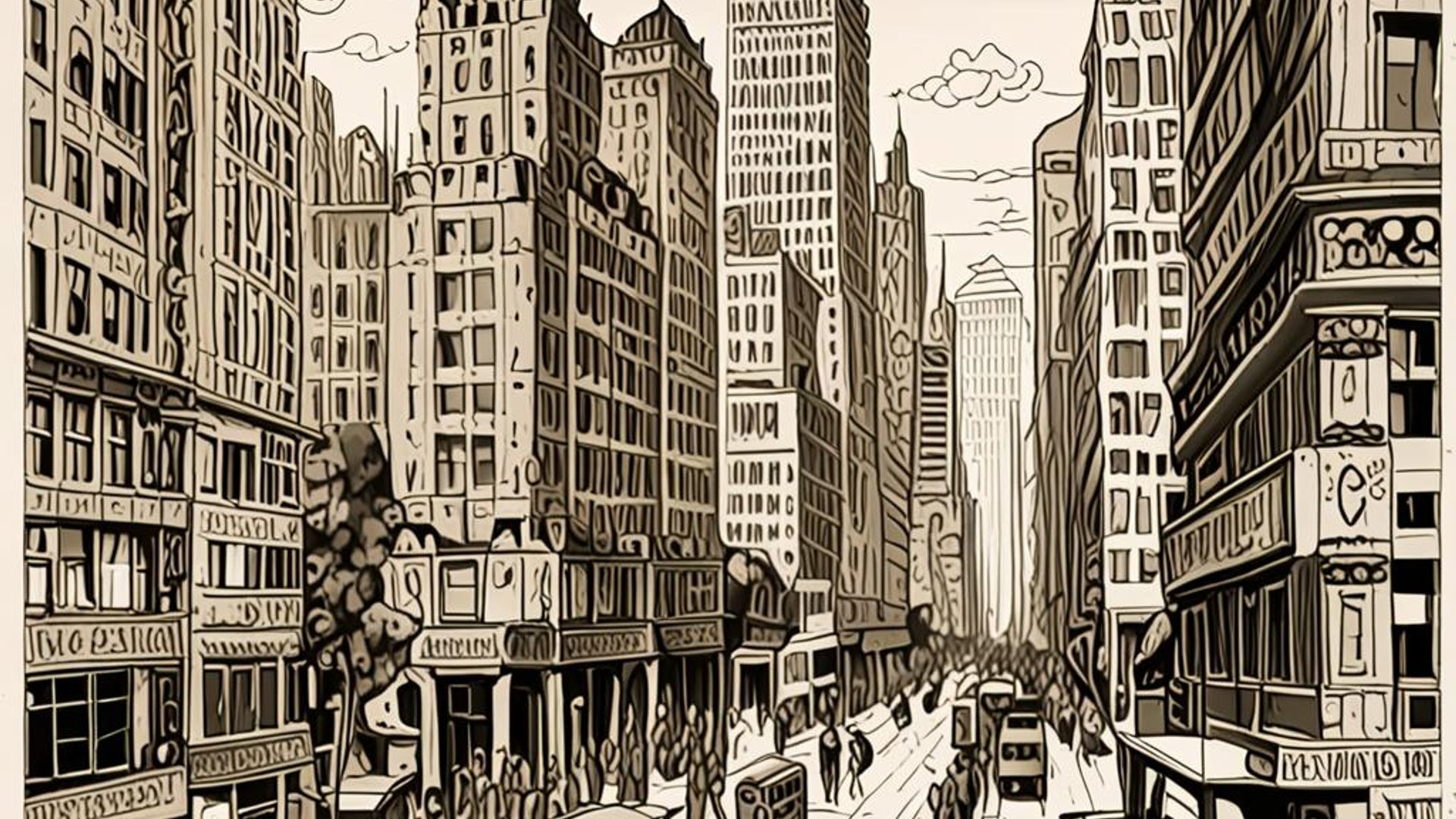
How U.S. cities can borrow Latin America's best urban ideas—then build them better
By a regulated optimist who grades in pencil, votes with both hands, and still believes maps should tell the truth.
I. The problem with our blueprints
merican cities like to narrate themselves in asphalt and appetite—bigger freeways, taller chillers, longer commutes. Then the heat arrives like a bell the size of a sky, and the old grammar buckles: creeks turn into flash floods, streets into gridded frying pans, substations into rumor. We keep trying to modernize with 20th-century nouns.
This essay proposes a different canon: learn from the hemisphere we pretend is a postcard. The most quietly innovative urban work of the last quarter-century has happened in Latin America—in hillside gondolas, neighborhood water commons, restoration megaprojects run by residents, and microgrids that keep the lights on when the big system blinks. If the United States wants a solarpunk future rooted in justice and engineering, this is the shelf to steal from.
I'm going to sketch a blueprint in three U.S. places—Los Angeles, Phoenix, and San Juan—and braid them to their southern antecedents: Medellín, Bogotá, Mexico City, Curitiba. The claim is simple: copy with humility, then adapt with law.
II. Medellín: cables, corridors, and the politics of proximity
Two decades ago Medellín was a synonym for terror; today it's a syllabus. The city's social-urbanist turn did not rely on a miracle so much as a sequence of infrastructures that shrink distance—libraries and schools in the steepest barrios, a gondola network that plugs the hills into the metro, green corridors that lower air temperature and raise dignity.
On violence: a natural-experiment study found homicide declined 66% more in intervention neighborhoods than in controls when Medellín improved physical infrastructure in the early 2000s. That's not myth; it's epidemiology.
On mobility: the cable systems (Metrocable/TransMiCable) are not theme-park tricks; they are commuter transit. Mexico City's Cablebús now carries >100,000 riders/day, cutting some trips by ~45%, and avoiding ~18,500 tons CO₂ in 2021–23—evidence that the technology scales in megacities too.
On heat: Medellín's Green Corridors program has documented ~2°C average cooling while adding biodiversity and safer cycling corridors—nature as public works.
On precedent: The BRT lineage that shaped Bogotá's TransMilenio and spread worldwide starts in Curitiba (1970s) under Jaime Lerner; design a city around buses and stations, not cars and excuses.
Lesson: Build the short connection first. Put the expensive dignity (a library, a clinic, shade) where the bus map goes gray; knit steep neighborhoods to jobs by cable; cool the city with linear forests, not PR.
III. Los Angeles: capture the storm, cool the street
Los Angeles has begun to steal correctly. Measure W—a countywide stormwater parcel fee—funds a Safe, Clean Water Program now delivering basin-scale benefits: ~59,700 acre-feet/year of stormwater capture projected across the first project portfolio, alongside water-quality compliance and parks. That's the arithmetic of resilience: one vote becomes recharge for a megacity.
On heat, the city is testing cool pavements at neighborhood scale. In Pacoima, a peer-reviewed field study found up to 3.5°F ambient reductions during extreme heat; on ordinary sunny days, ~2°F cooler than adjacent surfaces—modest numbers that matter when mortality curves are steep.
This is what Latin America taught first: do the cheap, near win now (bus priority, cables, trees), while the expensive, long win (subway, aquifer recovery) matures. LA is learning the water half. It should now learn the proximity half—especially for its hills and transit deserts.
Design move for LA: Copy Medellín's corridors and Curitiba's bus logic in the San Fernando and San Gabriel foothills; pair Measure W projects with frequent, shaded transit spines. When you build a bioswale, stripe a busway beside it; when you plant a corridor, legalize four new corner businesses under the shade.
IV. Phoenix: office of heat, grammar of care
Phoenix did something quietly historic: it created a municipal heat office with a published, annually updated Heat Response Plan, treating extreme heat like a named hazard, not a vibe. In 2024, Maricopa County recorded ~602 heat-associated deaths, down from a record 645 in 2023—still terrible, but a bend in the line, and a reminder that governance matters.
The 2025 plan reads like a checklists' chorus—cooling centers, worker protections, shade standards, tree investments, cross-agency drills. It's not glamorous; it's administrative mercy.
What Phoenix should steal next:
- Green corridors (Medellín) stitched to bus priority and last-mile shade—because heat kills across the journey, not just at destinations.
- Cable lines as topographic equity in its steepest gaps (a combined transit-tourism play that actually alters commute times), following Mexico City's Cablebús economics, not Zurich's postcard.
- Water commons logic (acequias as governance, not nostalgia) in canal-side districts: publish turn-taking for irrigation hours, shade easements, and flood routing as neighborhood charters.
Phoenix has already proven a city can organize for heat like a coastal city organizes for hurricanes: with names, budgets, and boredom. Keep going.
V. San Juan: the canal that became a constitution
If you want to watch solarpunk happen with clipboards and court orders, fly to San Juan and walk the Caño Martín Peña. For a century, the tidal channel silted and festered; eight working-class communities flooded with sewage-rich waters; planners promised and departed. The residents organized, invented a community land trust to fight displacement, and forced the city, the island, and the U.S. Army Corps of Engineers to adopt a full ecosystem restoration with dredging, wetland reconstruction, new walls, and equitable rehousing. Congress authorized it in WRDA 2007; recent federal infrastructure funds pushed it into construction.
The land-trust piece matters: it's a policy antidote to "green gentrification." EPA case material and scholarly work document how collective tenure stabilized families while letting billions in works proceed. Restoration as anti-displacement is not a slogan; it's a title instrument.
Energy, too: Puerto Rico's PR100 federal study concludes the island can reach 100% renewables by 2050 with the right investments and community participation; in Adjuntas, Casa Pueblo's community microgrids have already shown what resilience looks like when the big grid fails—keeping power during island-wide blackouts this year.
Lesson: Make the just thing the legal thing. Tie restoration to land trusts; tie rooftop solar subsidies to microgrid nodes; tie dredging to floodplain jobs in the same zip codes. The city becomes a charter, not a paint job.
VI. Bogotá and Curitiba: the bus as a civil right
American debates about transit often skip the simple sentence: buses can behave like metros if you give them the street. Bogotá's TransMilenio moves roughly 2 million weekday riders with off-board fare collection, platform-level boarding, and trunk-feeder geometry; Curitiba taught the template a generation earlier. You can start BRT in a fiscal quarter and then improve it forever.
For a solarpunk city, BRT is a moral technology: it buys time. Every year you run it well is a year neighborhoods get closer, emissions fall, and tempers calm while the subway tunnelers catch up.
VII. Mexico City: the cable car that acts like a street
The Cablebús is the most transferable Latin American innovation for U.S. hills and cul-de-sacs. It is electric, quiet, cheap per mile compared to rail, and—this matters—fast to deploy. City and NGO assessments show large time savings and meaningful CO₂ reductions from Lines 1 and 2, with strong equity benefits in the poorest boroughs. Build one in Los Angeles (Glassell Park–Eagle Rock–Highland Park), one in San Diego (Barrio Logan–Southeast), and watch the peripheries turn central.
VIII. Chile: sunlight as policy, not mood lighting
Want the energy math? Chile now gets ~33% of its electricity from wind + solar over the year, with hours above 50% renewables and 2024 reports showing renewables ≈ 68% of total generation. It is not a wealthy, coal-free fantasyland; it is a middle-income country that built transmission and price signals fast. If your city thinks rooftop programs are a lifestyle perk, send them the operator charts.
IX. A U.S. playbook (twelve moves)
Make heat a governed hazard. Every hot-summer metro should copy Phoenix: dedicated office + annual plan + public metrics. Deaths fall when boredom rises.
-
Pair flood capture with mobility. Every Measure W-style project should be built alongside bus lanes and shade geometry; publish acre-feet and minutes saved in the same dashboard.
Linear forests everywhere. Start green corridors on deadly arterials first; target 2°C cooling in five years with measurable canopy and evapotranspiration goals.
-
Cable where topography cheats. Build two demonstration aerial lines in the next federal grant cycle; insist on fare integration with bus/rail.
Treat buses like trains. Off-board payment, level boarding, headways you brag about. Stop apologizing; start scheduling.
Microgrids as public safety. In hurricane, wildfire, and PSPS country, fund community microgrids at health clinics, libraries, and markets—copy Casa Pueblo.
-
Restoration without displacement. For every waterfront or canal fix, require a community land trust or equivalent tenure guardrail; San Juan shows it's doable in U.S. law.
-
Treat language like electricity. Publish all hazard alerts, voting instructions, and transit changes bilingually by default; the audience exists.
-
Design for errands, not postcards. Count trips to school, groceries, care work; measure projects by minutes saved for burdens you don't photograph.
Centralize the metrics. Heat deaths, acre-feet captured, transit travel times, microgrid uptime—one citywide resilience ledger.
Procure shade. Put shade factors into street design standards (bus stops, crosswalks, sidewalks); fund maintenance like you fund asphalt.
Budget skepticism. For every nine-figure viaduct, require a "Medellín alternative" memo: What set of small projects could produce the same social outcome faster?
X. A brief detour through law (because the shovel needs a statute)
Good projects die in permitting. The Caño Martín Peña team did not wait for vibes; they obtained WRDA authorization, wrote a NEPA EIS, secured EPA/USACE alignment, and then married it to a land trust so benefits didn't walk. That's the real solarpunk: paperwork that liberates.
Energy is the same: PR100 is a federal roadmap, not an op-ed. When a plan is this detailed—modelling, siting, community advisory—you can force agencies to choose between options, not between action and inertia.
XI. Three vignettes for the file drawer
1) Pacoima, 3:07 p.m.
A thermometer says the street over there is 3.5°F hotter than the street over here because the paint is different and the trees keep their promises. A mother with a stroller changes corners. Policy is a shadow you can stand in.
2) Adjuntas, 9:12 p.m.
Island-wide blackout. Plaza lights stay on. Refrigerators hum behind bakery doors. A teenager points at the inverter and says in Spanish: "Esto es nuestro." The grid is a verb again.
3) Itagüí, 6:40 a.m.
A cable car door slides shut; a seven-minute flight replaces a forty-minute climb. At the bottom, a BRT trunk yawns open. Someone will be home for dinner because someone designed the city for errands, not epic tales.
XII. The politics of courtesy
Cities are made by how we greet each other. Los Angeles is greeting storms with cisterns; Phoenix is greeting heat with plans; San Juan is greeting water with law. The courtesy we owe our neighbors is not sentiment; it is infrastructure: the cable that saves an hour, the corridor that saves two degrees, the microgrid that saves a night.
Solarpunk is not neon vines on a skyscraper. It is common sense with a power bill.
References (validated)
- Medellín violence & urban upgrades: Cerdá et al., A Natural Experiment in Medellín (Am. J. Epidemiology) — 66% greater homicide decline in intervention areas
- Medellín green corridors cooling: C40 Knowledge Hub case study; corroborating summaries
- Cablebús impacts (CDMX): ITDP assessment (ridership >100k/day; ~45% time savings; ~18,569 tCO₂ avoided 2021–23)
- BRT lineage: WRI "Cities in Focus: Curitiba" and contemporary synthesis on 50 years of BRT
- Bogotá TransMilenio scale: 2024 ridership and system summary
- Los Angeles stormwater capture (Measure W/SCWP): Biennial report (projected ~59,673 acre-feet/yr; 265k acres managed)
- Cool pavement results (Pacoima): Smart Cities Dive summary of peer-reviewed study (up to 3.5°F ambient reduction in extreme heat)
- Phoenix heat governance: City of Phoenix Heat Office & 2025 Heat Response Plan; CDC MMWR on mortality trend; city press release on 2024 decline
- Record heat streak context: Reuters report (2024)
- Caño Martín Peña restoration: USACE feasibility/EIS; Jacksonville District project sheet; EPA Urban Waters update (BIL funding to construction)
- Community land trust & anti-displacement: Urban Waters Learning Network brief; peer-reviewed analysis of CMP CLT
- Puerto Rico PR100 (100% renewables by 2050 feasible): DOE/NREL PR100 program pages and report/roadmap
- Adjuntas microgrids perform during blackout: IEEE Spectrum report (June 2025) and DOE success story on Casa Pueblo/ORNL tool
- Chile renewables share: Ember analysis (wind+solar 33% in 2024); InvestChile summary of CEN data (renewables ~68% of generation in 2024)
If you want the practitioner pack, I'll assemble a one-pager per city with cost ranges, permitting steps, and model specs (corridor widths, station modules, microgrid sizes)—plus a shared KPI sheet so your council can argue in numbers, not adjectives.
This is the eighth in the Sol Meridian series exploring the hidden continuities that shape American public life. A practical guide to learning from Latin American urban innovations for climate-resilient, equitable cities.