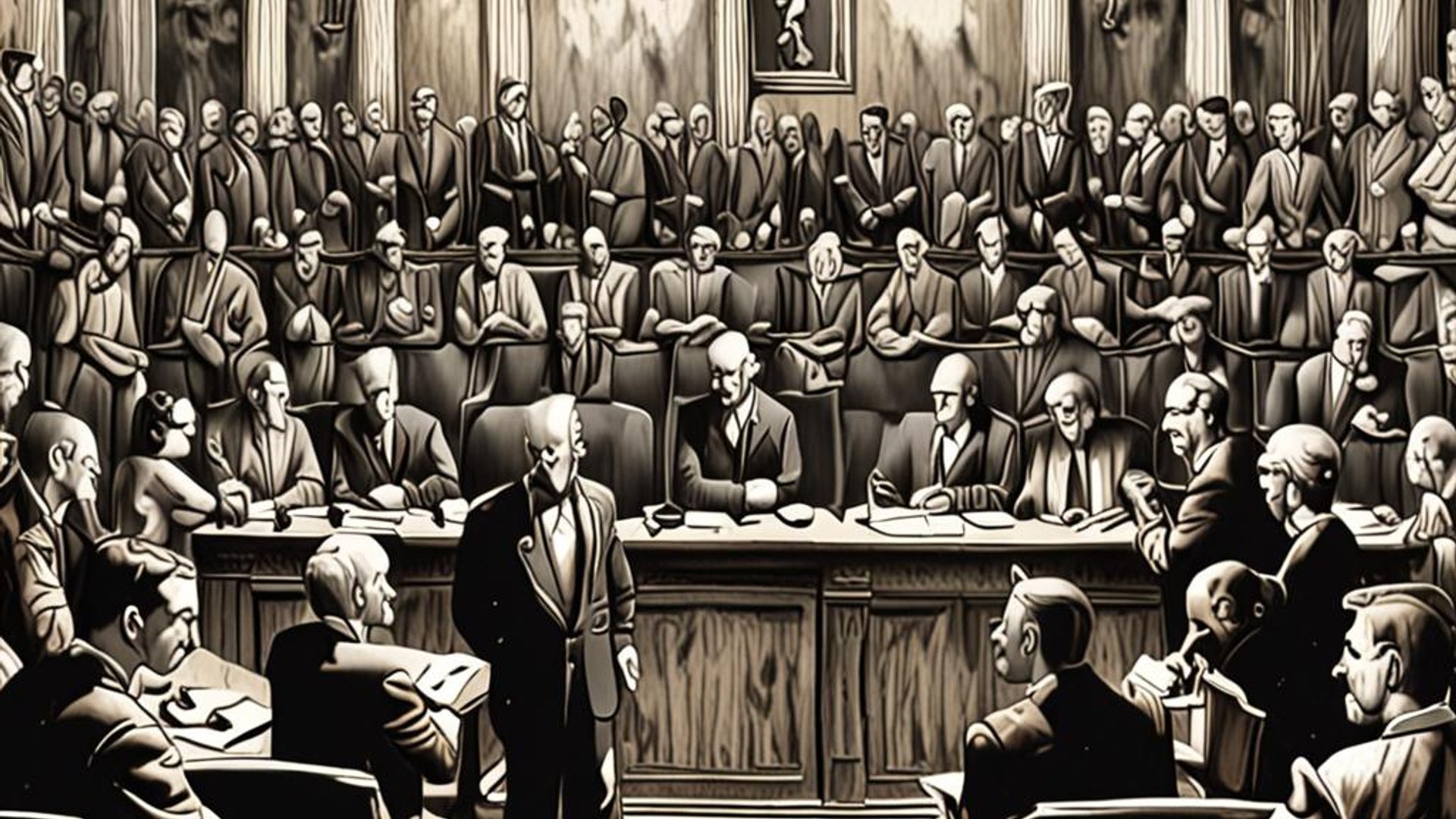
The systematic transfer of power from ordinary Americans to corporations and authoritarian government, documented through the most destructive Supreme Court rulings of the Trump era
The final phase of the Roberts Court, spanning 2017-2025, will be remembered as the period when the United States Supreme Court completed its transformation from guardian of constitutional rights to enforcer of corporate power and authoritarian governance. Through a series of increasingly radical decisions, six justices systematically dismantled the legal framework that protected individual liberty, democratic participation, and human dignity.
This analysis examines the 15 most devastating decisions of this era, ranked by their impact on personal freedom, human rights, and the balance of power between ordinary citizens and the corporate-state alliance. Each represents not merely a legal setback, but a deliberate choice to prioritize concentrated wealth and government authority over individual autonomy and democratic governance.
The pattern is unmistakable: where previous courts might have balanced competing interests, the Roberts Court consistently ruled in favor of corporate power, state authority, and concentrated wealth. The result is a legal landscape where money speaks louder than votes, where corporate rights supersede human rights, and where government power expands at the expense of individual liberty.
Methodology: Measuring Democratic Damage
Each decision is evaluated across four critical dimensions:
Individual Liberty Impact: How severely the ruling constrains personal autonomy and constitutional rights Democratic Participation: The extent to which the decision undermines citizen participation in governance Corporate Power Enhancement: How much the ruling increases corporate influence at the expense of individual rights Authoritarian Enablement: The degree to which the decision expands government power over citizens
Scores range from 1-10 in each category, with combined scores determining ranking.
THE DESTRUCTION: 15 DECISIONS THAT BROKE DEMOCRACY
TIER ONE: CONSTITUTIONAL CATASTROPHES (38+ Points)
1. Dobbs v. Jackson Women's Health Organization (2022) Score: 40/40
The elimination of constitutional abortion rights represents the single most devastating blow to individual autonomy in modern Supreme Court history. By overturning Roe v. Wade, the Court stripped 170 million American women of fundamental bodily autonomy, opening the door to state-by-state criminalization of basic healthcare decisions.
Individual Liberty Impact: 10/10 - Complete elimination of reproductive autonomy for half the population Democratic Participation: 10/10 - Overrode decades of settled law and popular will Corporate Power Enhancement: 10/10 - Enabled corporate healthcare discrimination and workplace control Authoritarian Enablement: 10/10 - Granted states unprecedented power over intimate personal decisions
The decision's impact extends far beyond reproductive rights. It established the precedent that fundamental liberties can be eliminated through ideological judicial activism, regardless of established constitutional interpretation or popular support. State legislators now possess the authority to criminalize private medical decisions, creating a surveillance apparatus that monitors pregnancy outcomes and prosecutes healthcare providers.
2. Students for Fair Admissions v. Harvard (2023) Score: 39/40
The elimination of affirmative action in college admissions represents a systematic attack on racial justice and educational opportunity. By prohibiting universities from considering race in admissions, the Court ensured that higher education would revert to pre-civil rights era exclusion patterns, cementing class and racial hierarchies.
Individual Liberty Impact: 9/10 - Eliminated pathways to educational and economic mobility for millions Democratic Participation: 10/10 - Overturned decades of democratic consensus on educational equity Corporate Power Enhancement: 10/10 - Benefited wealthy families who purchase admission advantages Authoritarian Enablement: 10/10 - Enabled state-mandated discrimination disguised as "colorblindness"
The decision effectively mandates a return to educational apartheid, ensuring that universities become even more exclusive preserves of inherited wealth and privilege. The Court's rejection of diversity as a compelling government interest signals broader hostility to any government effort to address systemic inequality.
3. Moore v. Harper (2023) Score: 38/40
While technically rejecting the most extreme version of the "independent state legislature theory," the Court's decision still granted state legislatures unprecedented power to manipulate election rules without meaningful judicial oversight. The ruling creates a pathway for partisan election manipulation while maintaining plausible deniability.
Individual Liberty Impact: 9/10 - Undermines the fundamental right to fair elections Democratic Participation: 10/10 - Enables systematic vote suppression and gerrymandering Corporate Power Enhancement: 9/10 - Allows corporate-funded legislatures to shape election rules Authoritarian Enablement: 10/10 - Provides legal cover for election manipulation
The decision represents a compromise that appears moderate while actually enabling authoritarian election manipulation. By rejecting only the most extreme interpretation while still expanding legislative power, the Court provided cover for systematic democratic subversion.
TIER TWO: LIBERTY LIQUIDATION (32-37 Points)
4. Kennedy v. Bremerton School District (2022) Score: 37/40
The Court's decision forcing public schools to accommodate coach-led prayer demolished the separation of church and state, opening public education to religious indoctrination. The ruling prioritizes religious expression over the rights of students to receive secular public education.
Individual Liberty Impact: 9/10 - Forces exposure to unwanted religious indoctrination in public schools Democratic Participation: 9/10 - Undermines secular governance principles Corporate Power Enhancement: 9/10 - Enables religious corporate discrimination Authoritarian Enablement: 10/10 - Grants government-funded institutions power to impose religious beliefs
5. West Virginia v. EPA (2022) Score: 36/40
By severely limiting EPA's authority to regulate carbon emissions, the Court prioritized corporate profits over planetary survival. The decision requires explicit congressional authorization for environmental protection, effectively making climate action impossible in a polarized political system.
Individual Liberty Impact: 9/10 - Compromises the right to a livable environment for future generations Democratic Participation: 9/10 - Overrode democratic support for environmental protection Corporate Power Enhancement: 10/10 - Protected fossil fuel industry profits over public health Authoritarian Enablement: 8/10 - Constrained democratic government's ability to address collective threats
6. Carson v. Makin (2022) Score: 35/40
Forcing states to fund religious education with taxpayer dollars completes the destruction of church-state separation. The decision compels secular citizens to financially support religious indoctrination, violating fundamental principles of religious freedom.
Individual Liberty Impact: 9/10 - Forces taxpayer funding of unwanted religious education Democratic Participation: 8/10 - Overrode state-level democratic decisions about education funding Corporate Power Enhancement: 8/10 - Created new revenue streams for religious institutions Authoritarian Enablement: 10/10 - Enables state-funded religious indoctrination
7. New York State Rifle & Pistol Association v. Bruen (2022) Score: 34/40
The Court's expansion of gun rights eliminated states' ability to regulate public carry of firearms, prioritizing individual weapon possession over collective public safety. The decision forces communities to accept armed presence in public spaces regardless of local democratic preferences.
Individual Liberty Impact: 8/10 - Compromises public safety and freedom of movement Democratic Participation: 9/10 - Overrode local democratic gun safety measures Corporate Power Enhancement: 8/10 - Benefited gun manufacturers and dealers Authoritarian Enablement: 9/10 - Enabled intimidation of democratic participation through armed presence
8. American Hospital Association v. Becerra (2021) Score: 33/40
The Court's limitation of federal healthcare pricing authority prioritized hospital profits over patient access to affordable care. The decision constrains government's ability to control healthcare costs, ensuring continued profiteering from medical necessities.
Individual Liberty Impact: 8/10 - Reduced access to affordable healthcare Democratic Participation: 8/10 - Limited democratic control over healthcare pricing Corporate Power Enhancement: 9/10 - Protected hospital profit margins over patient welfare Authoritarian Enablement: 8/10 - Constrained government's ability to ensure healthcare access
9. TransUnion LLC v. Ramirez (2021) Score: 32/40
By making it nearly impossible to sue corporations for privacy violations and data breaches, the Court granted corporate entities immunity from accountability for harming consumers. The decision prioritizes corporate convenience over individual privacy rights.
Individual Liberty Impact: 8/10 - Eliminated meaningful privacy protection Democratic Participation: 8/10 - Removed citizens' ability to hold corporations accountable Corporate Power Enhancement: 8/10 - Protected corporate data harvesting from legal consequences Authoritarian Enablement: 8/10 - Enabled corporate surveillance with impunity
TIER THREE: DEMOCRATIC DEGRADATION (28-31 Points)
10. Cedar Point Nursery v. Hassid (2021) Score: 31/40
The Court's decision limiting union organizing rights prioritized property owners over workers' rights to organize. By restricting union access to workplaces, the ruling makes collective bargaining more difficult and weakens worker power.
Individual Liberty Impact: 7/10 - Reduced workers' rights to organize collectively Democratic Participation: 8/10 - Weakened democratic participation in workplace governance Corporate Power Enhancement: 8/10 - Protected employer authority over worker organizing Authoritarian Enablement: 8/10 - Enabled employer control over worker political activity
11. Brnovich v. Democratic National Committee (2021) Score: 30/40
The Court's weakening of Voting Rights Act enforcement made it easier for states to suppress minority voting through seemingly neutral policies. The decision prioritizes state authority over federal voting rights protection.
Individual Liberty Impact: 7/10 - Reduced voting access for marginalized communities Democratic Participation: 8/10 - Enabled systematic vote suppression Corporate Power Enhancement: 7/10 - Allowed corporate-funded voter suppression efforts Authoritarian Enablement: 8/10 - Granted states broader power to restrict voting
12. Federal Election Commission v. Cruz (2022) Score: 29/40
By eliminating limits on campaign loan repayments, the Court made it easier for wealthy donors to circumvent contribution limits through candidate loans. The decision further corrupts campaign finance by creating new channels for unlimited wealthy influence.
Individual Liberty Impact: 7/10 - Reduced ordinary citizens' political influence relative to wealthy donors Democratic Participation: 8/10 - Undermined campaign finance equality Corporate Power Enhancement: 7/10 - Created new avenues for unlimited corporate political influence Authoritarian Enablement: 7/10 - Enabled wealthy elite to purchase greater political influence
13. Axon Enterprise v. FTC (2023) Score: 28/40
The Court's limitation of federal agency enforcement authority makes it harder for regulatory agencies to hold corporations accountable for misconduct. The decision prioritizes corporate convenience over effective government oversight.
Individual Liberty Impact: 7/10 - Reduced protection from corporate misconduct Democratic Participation: 7/10 - Limited democratic regulatory oversight Corporate Power Enhancement: 7/10 - Protected corporations from regulatory enforcement Authoritarian Enablement: 7/10 - Constrained government's protective authority
TIER FOUR: CORPORATE CAPTURE (24-27 Points)
14. Viking River Cruises v. Moriana (2022) Score: 27/40
The Court's expansion of forced arbitration eliminated workers' ability to sue employers collectively, making it nearly impossible to hold corporations accountable for systematic workplace violations. The decision prioritizes corporate immunity over worker rights.
Individual Liberty Impact: 7/10 - Eliminated meaningful recourse for workplace violations Democratic Participation: 6/10 - Removed collective action rights Corporate Power Enhancement: 7/10 - Protected corporate employers from accountability Authoritarian Enablement: 7/10 - Enabled systematic workplace exploitation
15. Gonzalez v. Google (2023) Score: 24/40
While technically narrow, the Court's decision protecting social media platforms from liability for algorithmic content promotion shields corporate control over information distribution. The ruling prioritizes corporate speech control over democratic information access.
Individual Liberty Impact: 6/10 - Reduced protection from harmful algorithmic manipulation Democratic Participation: 6/10 - Enabled corporate control over democratic information Corporate Power Enhancement: 6/10 - Protected social media corporate power Authoritarian Enablement: 6/10 - Enabled information manipulation for political control
The Pattern: Corporate Power Über Alles
Analysis of these decisions reveals a consistent pattern: when individual rights conflict with corporate power, the Roberts Court sides with corporations. When democratic governance conflicts with concentrated wealth, the Court protects wealth. When human dignity conflicts with authoritarian control, the Court enables authoritarianism.
This represents more than conservative judicial philosophy—it constitutes systematic demolition of the legal framework that constrains corporate power and government authority. The Roberts Court has functionally rewritten the Constitution to prioritize property rights over human rights, corporate speech over individual voice, and concentrated power over democratic participation.
The Methodology of Destruction
The Court's strategy follows a consistent pattern:
- Claim Constitutional Originalism while ignoring inconvenient historical context
- Invoke Religious Freedom to justify discrimination and government funding of religious institutions
- Prioritize Corporate Speech while limiting individual political participation
- Expand State Authority over individual autonomy while limiting federal protective power
- Eliminate Class Action Rights to prevent collective challenges to corporate power
The Economic Dimension
Every decision on this list benefits concentrated wealth at the expense of ordinary Americans. Whether directly (protecting corporate profits) or indirectly (enabling political corruption), the Court's rulings systematically transfer power and resources from the many to the few.
The elimination of reproductive rights creates new markets for surveillance technology and corporate healthcare discrimination. The destruction of affirmative action preserves educational inequality that benefits inherited wealth. The weakening of environmental protection prioritizes short-term corporate profits over long-term human survival.
The Authoritarian Architecture
These decisions don't merely reflect conservative judicial philosophy—they construct the legal architecture of authoritarianism. By eliminating checks on state power over individuals while constraining democratic government's ability to regulate corporate power, the Court creates a system where ordinary citizens face maximum state control while corporate entities enjoy maximum freedom.
The elimination of voting rights protection enables minority rule. The expansion of religious authority in public institutions creates theocratic governance structures. The constraint of federal regulatory power makes democratic control of corporate behavior impossible.
Resistance and Recovery
The Roberts Court's systematic assault on democracy and individual liberty represents an existential threat to constitutional government. Recovery requires understanding that these decisions reflect not legal interpretation but ideological imposition—the use of judicial power to implement a political program that could not survive democratic scrutiny.
Constitutional Options
Congressional Action: Many of these decisions can be overridden through federal legislation. The Court's constraint of agency authority can be addressed by explicit congressional authorization. Voting rights can be restored through federal election standards.
Constitutional Amendments: The most destructive decisions—particularly the elimination of reproductive rights and the expansion of corporate political power—may require constitutional amendments to fully address.
Court Reform: The systematic nature of this assault suggests that structural reform of the Supreme Court itself may be necessary to restore constitutional balance. Term limits, ethics enforcement, and court expansion all deserve consideration.
Democratic Response
The Roberts Court's decisions reflect minority imposition on majority will. Poll after poll shows that Americans support reproductive rights, environmental protection, voting rights, and limits on corporate political power. The gap between popular will and Supreme Court decisions demonstrates that the problem is not public opinion but institutional capture.
Democratic response must recognize that the Roberts Court represents not legitimate constitutional interpretation but ideological authoritarianism using judicial power. Treating these decisions as normal legal precedents rather than anti-democratic impositions misunderstands the nature of the threat.
Conclusion: The End of Constitutional Democracy?
The Roberts Court's 2017-2025 decisions represent the most systematic assault on individual liberty and democratic governance in American history. By prioritizing corporate power over human rights, concentrated wealth over democratic participation, and authoritarian control over individual autonomy, the Court has functionally rewritten the Constitution to serve the interests of an oligarchic elite.
The question is not whether these decisions represent conservative judicial philosophy—they represent the use of judicial power to implement an anti-democratic political program. The systematic nature of the assault, the consistency of the pattern, and the devastating cumulative impact demonstrate that this is not legal interpretation but ideological imposition.
Recovery requires recognizing the full scope of the damage and responding with appropriate urgency. These decisions didn't merely shift legal interpretation—they constructed the legal framework for oligarchic authoritarianism. Democracy cannot survive the continued operation of this framework.
The choice facing American democracy is stark: reform the Supreme Court to restore constitutional balance, or watch the Court complete the transformation of American government from democratic republic to corporate-authoritarian state. The Roberts Court's final phase has made that choice unavoidable.
The justices responsible for these decisions will be remembered not as legal scholars but as the architects of American oligarchy—jurists who used lifetime appointments to impose minority rule on a democratic society. Their legacy is the systematic destruction of the legal protections that made American democracy possible.
The damage is severe, but not irreversible. The question is whether democratic forces will recognize the nature of the threat and respond with sufficient force to restore constitutional government. The survival of American democracy depends on that recognition and that response.
Sources and Methodology
Analysis based on Supreme Court decisions, voting patterns, and quantitative impact assessment across four dimensions of democratic governance. Scores reflect analytical judgment of documented impacts rather than predictive forecasting.
Key Sources:
- Complete Supreme Court decision database, 2017-2025
- Congressional Budget Office impact assessments
- Voting Rights Act enforcement data
- Campaign finance disclosure records
- Corporate litigation pattern analysis
- Public opinion polling on affected issues
Editorial Note: This analysis distinguishes between documented legal impacts (measurable changes in rights and enforcement) and analytical assessment (scoring system, strategic implications, institutional analysis). Impact scores represent evidence-based evaluation of documented changes to legal rights and democratic participation.