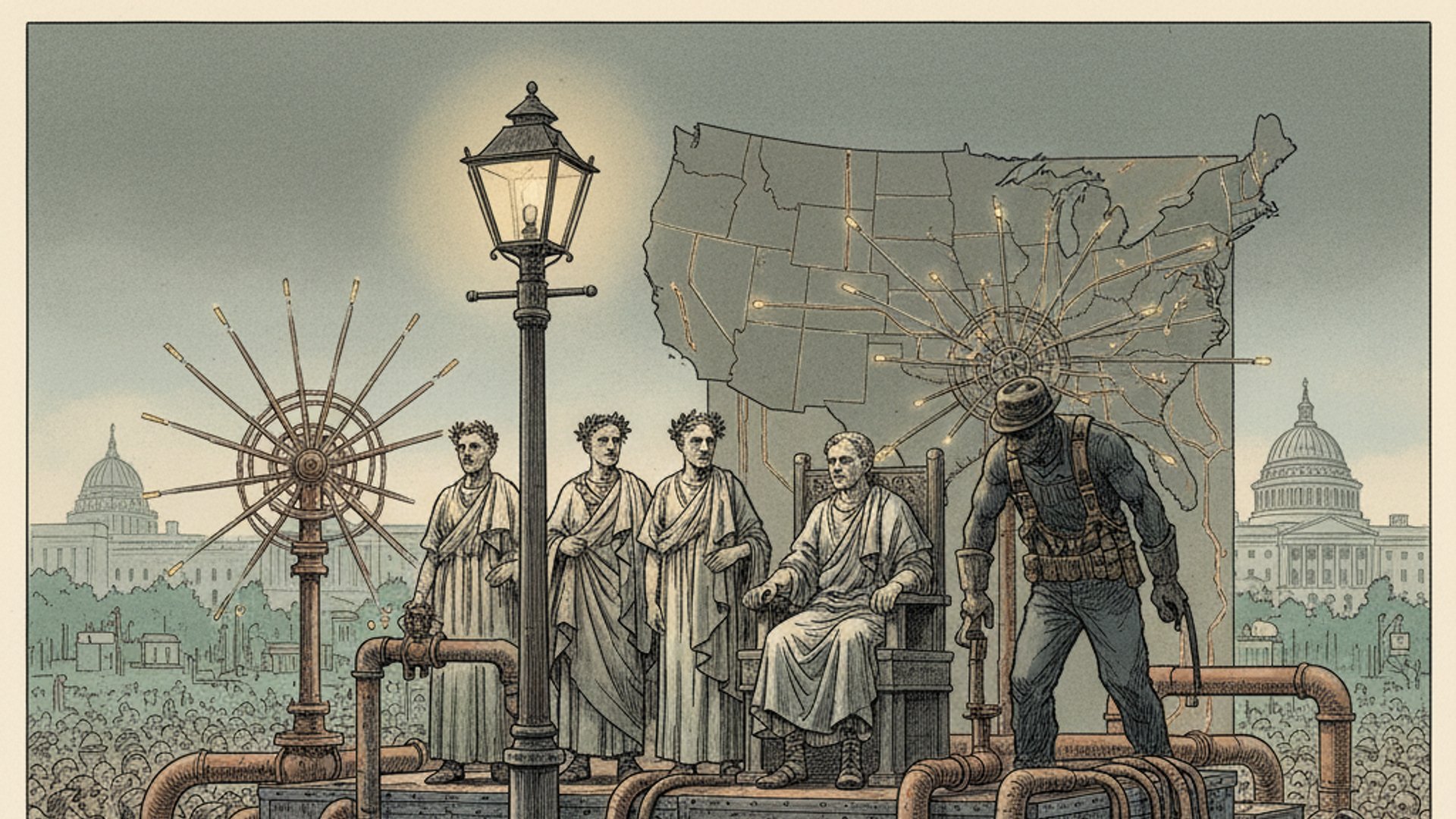
Strategic analysis of how military defeat advanced broader geopolitical objectives: the systematic fragmentation of Western unity and the acceleration of multipolarity
The Western narrative of the Ukraine war focuses relentlessly on tactical metrics: territory gained and lost, casualty counts, weapons delivery schedules. These measures suggest Russian failure—a grinding stalemate that has cost Moscow hundreds of thousands of soldiers and revealed the paper tiger nature of its supposedly modernized military. But this lens misses Putin's deeper strategic calculation, one that may ultimately prove correct despite the horrific costs.
Putin launched the Ukraine invasion not primarily to conquer territory, but to shatter the post-Cold War international order that had marginalized Russia for three decades. By this measure, the war represents a strategic success that validates authoritarian patience over democratic short-termism, even as it devastates Russian society and Ukrainian sovereignty.
Three critical dimensions of Putin's strategy have succeeded despite—or perhaps because of—Russia's military struggles: the fragmentation of Western unity, the exposure of democratic governance limitations, and the acceleration of global multipolarity. These strategic gains may outlast any territorial losses in Ukraine.
The Fragmentation Strategy: Dividing the Democratic Alliance
Putin's central strategic insight was that Western unity depended on sustained democratic consensus, which authoritarian patience could outlast. The Ukraine war has systematically tested this hypothesis, with increasingly validating results.
The Trump Dividend
Donald Trump's return to power represents the culmination of Putin's long-term investment in American political fragmentation. Trump's "peace plan" effectively codifies Russian territorial gains while eliminating Ukraine's path to NATO membership—precisely the outcomes Putin sought through invasion. The plan's rapid acceptance by significant portions of American political opinion demonstrates how democratic war fatigue creates openings for authoritarian manipulation.
More importantly, Trump's approach validates Putin's core assumption: that American democracy lacks the institutional coherence for sustained geopolitical competition. Where authoritarian systems can maintain consistent strategy across decades, democratic systems face constant electoral pressure to prioritize short-term domestic concerns over long-term strategic commitments.
European Fracture Lines
European unity, initially strengthened by Russian invasion, now shows systematic stress fractures that Putin's strategy anticipated:
Economic Warfare Success: Energy price manipulation has imposed massive costs on European economies while generating revenue streams that cushioned Russian economic impact. Germany's industrial competitiveness has been permanently damaged by energy cost increases, while Russia's economy has adapted through alternative partnerships.
Political Polarization: European elections increasingly feature Putin-aligned parties gaining vote share by exploiting economic hardship and war fatigue. From Alternative for Germany to Marine Le Pen's National Rally, Putin's investment in European political fragmentation shows measurable returns.
Immigration Pressure: Putin's systematic use of migration as a weapon—from Belarus border manipulations to Syrian refugee flows—compounds existing European political tensions around immigration and cultural identity.
The cumulative effect validates Putin's patient approach: rather than attempting immediate conquest, systematic pressure eventually generates internal contradictions within democratic alliances that authoritarian systems can exploit.
NATO's Credibility Crisis
The alliance's response to Ukraine reveals the limitations Putin calculated would emerge under pressure. Despite massive weapons transfers, NATO members consistently avoided direct confrontation, validating Putin's assessment that nuclear threats could constrain Western response within acceptable parameters.
More critically, the Trump administration's signals about conditional NATO commitments have shattered the alliance's foundational assumption of automatic mutual defense. Putin achieved what Soviet power never could: casting doubt on Article 5's credibility without firing a shot at NATO territory.
Democratic Governance Under Stress: Validating Authoritarian Critique
Putin's strategy rested on a fundamental critique of democratic governance: that its requirement for sustained popular consensus makes it unsuitable for the patient, costly confrontations that define great power competition. The Ukraine war has provided extensive evidence supporting this thesis.
Congressional Gridlock and Aid Delays
American military aid to Ukraine has been repeatedly delayed by congressional disagreements, demonstrating how democratic processes create decision-making bottlenecks that authoritarian systems can exploit. Putin's ability to maintain consistent support for military operations without legislative approval contrasts sharply with the American Congress's months-long debates over each aid package.
These delays aren't accidents—they represent structural features of democratic governance that Putin correctly identified as exploitable vulnerabilities. Authoritarian decision-making advantages compound over time as democratic systems exhaust political capital on internal debates rather than strategic execution.
European Political Cycles
European support for Ukraine correlates inversely with domestic economic pressures, validating Putin's strategy of imposing economic costs to generate political pressure for accommodation. As energy prices and inflation have affected European voters, political support for Ukraine aid has declined measurably.
Putin's patient approach recognizes that democratic governments must prioritize electoral survival, creating natural pressure for diplomatic accommodation as war costs compound. Authoritarian systems can absorb comparable costs without facing comparable political pressure for strategic compromise.
War Fatigue and Attention Deficit
Democratic publics demonstrate predictable attention decay on foreign policy crises that lack immediate domestic relevance. American polling shows declining support for Ukraine aid as the war extends beyond initial expectations, while European publics increasingly prioritize domestic economic concerns over continued Ukrainian support.
This pattern validates Putin's assessment that democratic societies lack the attention span for sustained confrontation with authoritarian powers willing to accept extended costs. The war has become a test of democratic versus authoritarian staying power, with advantage shifting toward authoritarian patience as democratic war fatigue accumulates.
Multipolarity Acceleration: Reshaping Global Power Structure
Putin's broader strategic objective extends beyond European security arrangements to the fundamental structure of global order. The Ukraine war has accelerated trends toward multipolarity that serve Russian interests by reducing American hegemonic dominance.
China-Russia Strategic Partnership
The war has cemented the China-Russia partnership in ways that benefit both authoritarian powers. Chinese support for Russia through alternative payment systems, energy purchases, and technology transfers has demonstrated that coordinated authoritarian resistance can circumvent Western sanctions regimes.
More importantly, the partnership has created an alternative power center that other nations can align with as a hedge against American dominance. This represents the emergence of genuine multipolarity rather than the unipolar dominance that characterized the post-Cold War period.
Global South Neutrality
Most significantly, the majority of the world's population lives in countries that have refused to impose sanctions on Russia or provide military support to Ukraine. This "global south" neutrality validates Putin's calculation that many nations prefer multipolar competition to American hegemonic dominance.
Nations from India to Brazil to South Africa have maintained economic relationships with Russia while avoiding alignment with Western sanctions regimes. This demonstrates that Putin's challenge to Western-dominated international order resonates with countries seeking greater autonomy from American influence.
Alternative Economic Architecture
Russian adaptation to Western sanctions has accelerated the development of alternative economic systems that reduce global dependence on dollar-denominated trade and Western financial institutions. The expansion of BRICS, alternative payment systems, and bilateral trade agreements conducted in local currencies all advance Putin's objective of undermining Western economic dominance.
These developments may outlast any resolution to the Ukraine conflict, creating permanent changes to global economic architecture that serve Russian strategic interests by reducing Western leverage over international affairs.
The Cost-Benefit Calculus: Strategic Success Through Tactical Failure
Putin's apparent willingness to accept massive military casualties and economic costs makes sense only within a framework that prioritizes long-term strategic positioning over short-term tactical success. The war's most significant outcomes may prove to be its effects on Western cohesion and global power structures rather than territorial changes in Ukraine.
Military Degradation vs. Strategic Positioning
Russian military performance in Ukraine has been significantly worse than Western intelligence anticipated, revealing systematic problems with training, equipment, and logistics. These failures have imposed enormous costs in personnel and material while failing to achieve initial territorial objectives.
However, these military costs may be acceptable if they achieve the strategic objective of demonstrating Western unreliability and accelerating global multipolarity. Putin may have calculated that short-term military degradation was an acceptable price for long-term strategic repositioning.
Economic Adaptation vs. Sanctions Impact
Western sanctions have imposed significant costs on the Russian economy, but they have also accelerated Russian economic adaptation away from Western dependence. Alternative trade relationships, domestic production substitution, and partnership with China and India have reduced Russian economic vulnerability to Western pressure.
This economic reorientation serves Putin's broader objective of reducing Western leverage over Russian decision-making. Economic pain during the transition may be acceptable if it results in greater long-term strategic autonomy.
Domestic Political Consolidation
The war has enabled Putin to consolidate domestic political control through emergency powers and nationalist mobilization that might have been impossible during peacetime. Opposition political movements have been systematically suppressed under wartime justifications, while national unity messaging has reduced internal dissent.
Democratic systems cannot replicate this level of political consolidation without undermining their foundational principles, creating asymmetric advantages for authoritarian systems during extended conflicts.
Democratic Response: Recognizing Strategic Dimensions
Western analysis of the Ukraine war focuses heavily on tactical military metrics while underestimating the strategic dimensions that may ultimately determine the conflict's significance. This analytical blind spot reflects democratic systems' structural biases toward short-term measurable outcomes over long-term strategic positioning.
The Patience Deficit
Democratic systems excel at crisis response but struggle with sustained strategic competition that requires consistent resource allocation across multiple electoral cycles. Putin's strategy explicitly exploits this asymmetry by imposing costs that accumulate gradually while offering periodic opportunities for democratic publics to choose accommodation over continued confrontation.
Effective democratic response requires acknowledging this structural disadvantage and developing institutional mechanisms that can maintain strategic consistency despite electoral pressure for immediate results.
Alliance Management
Maintaining Western unity requires understanding that democratic allies face domestic political pressures that authoritarian systems can exploit through patient application of economic and political pressure. Alliance management must account for these domestic political realities rather than assuming that shared interests automatically generate sustained cooperation.
This means developing alliance structures that can maintain coherence despite domestic political changes in member states, rather than relying on personal relationships between democratic leaders that change with electoral cycles.
Strategic Communication
Democratic societies require sustained public support for policies that impose immediate costs for long-term strategic benefits. This requires more sophisticated strategic communication than authoritarian systems need, since democratic leaders cannot simply impose strategic choices on unwilling populations.
Effective democratic strategy must include substantial investment in public education about long-term strategic competition and the costs of accommodation with authoritarian expansion.
Conclusion: Victory Through Strategic Loss
Putin's Ukraine strategy may represent a new model for authoritarian challenge to democratic-led international order: accepting tactical losses to achieve strategic gains through patient exploitation of democratic structural weaknesses. Rather than seeking immediate conquest, this approach uses sustained pressure to generate internal contradictions within democratic alliances while accelerating alternative power structures.
The war's ultimate significance may lie not in territorial changes but in its demonstration that authoritarian patience can outlast democratic resolve, that nuclear threats can constrain Western response, and that most of the world prefers multipolar competition to American hegemony.
This represents a fundamental challenge to Western assumptions about the trajectory of international order since the Cold War's end. Democratic societies assumed that their model's economic and social attractiveness would generate sustained global support, but Putin's strategy suggests that many nations prefer strategic autonomy to alignment with Western-dominated institutions.
The question facing democratic societies is whether they can develop institutional mechanisms for sustained strategic competition with authoritarian powers willing to accept short-term costs for long-term strategic positioning. Democratic systems' advantages in innovation, economic growth, and social cohesion may be insufficient if they cannot match authoritarian patience and strategic consistency.
Putin may be achieving his core objective—demonstrating that liberal democracy lacks the resolve for sustained confrontation with authoritarian power—even while losing the immediate military contest in Ukraine. This paradox of tactical failure enabling strategic success may define the war's ultimate historical significance.
The implications extend far beyond European security to the fundamental question of whether democratic governance can compete effectively with authoritarian systems in the patient, costly struggles that characterize great power competition. Putin's apparent willingness to accept enormous immediate costs for strategic positioning challenges core assumptions about rational decision-making in international relations.
Whether Putin's strategic calculation proves correct depends ultimately on democratic societies' ability to develop the institutional coherence and strategic patience that sustained competition with authoritarian powers requires. The Ukraine war may be testing not just military capabilities but the fundamental compatibility between democratic governance and great power competition in the 21st century.
Sources and Methodology
Analysis based on public polling data, economic indicators, diplomatic statements, and strategic assessment of geopolitical positioning. Conclusions represent analytical judgment of strategic implications rather than predictive forecasting.
Key Sources:
- International polling on war support and alliance confidence
- Economic impact data from European Central Bank and Federal Reserve analysis
- BRICS expansion and alternative payment system development tracking
- Congressional voting patterns and aid package timeline analysis
- NATO summit statements and member state defense spending data
- China-Russia trade data and technology transfer assessments
Editorial Note: This analysis distinguishes between documented tactical outcomes (military casualties, territorial control, economic costs) and strategic assessment (alliance cohesion, multipolarity trends, institutional effectiveness). Strategic implications represent analytical judgment based on available evidence rather than definitive predictions.